

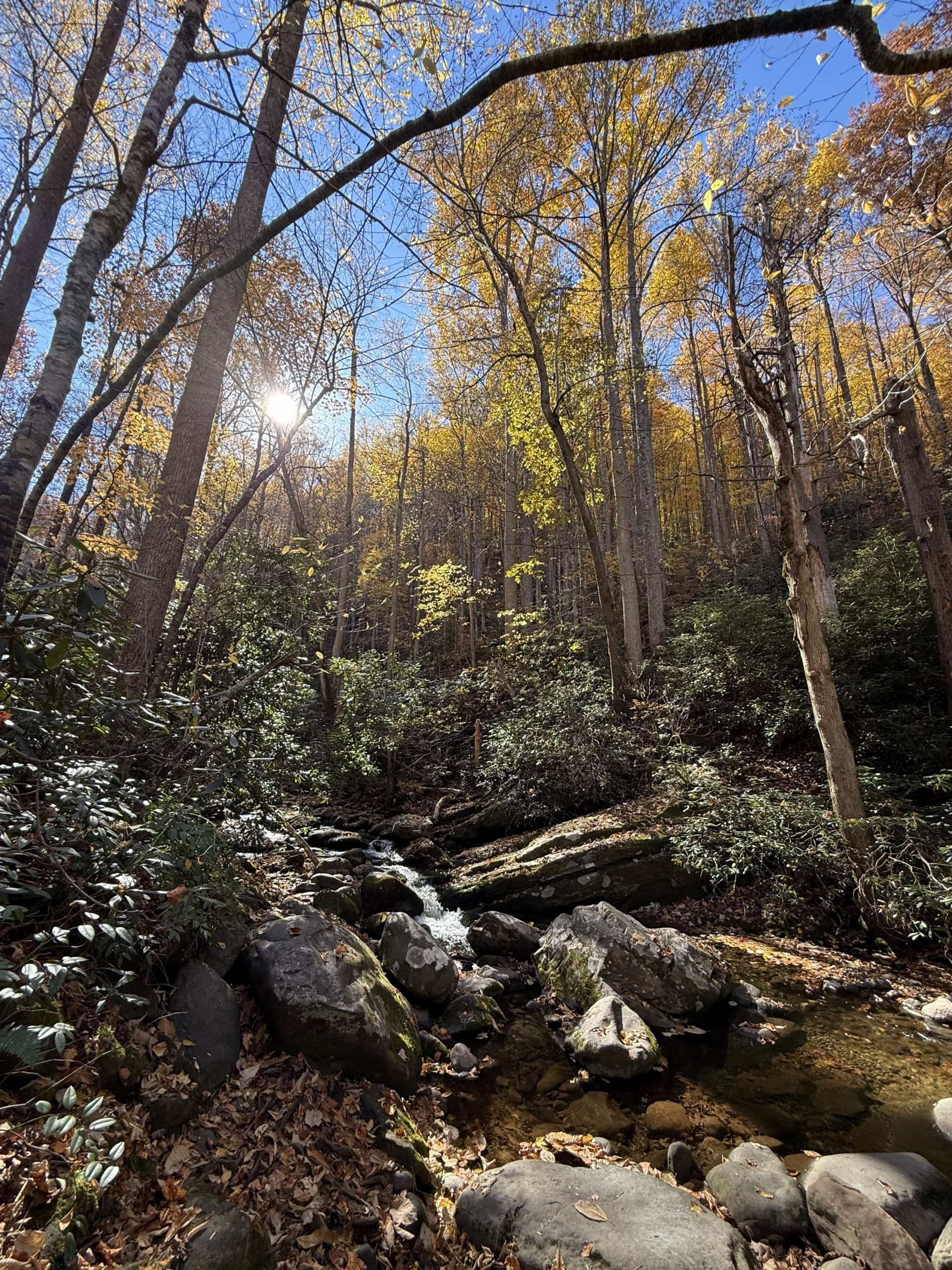
Every fall, thousands of people book a weekend in the Smoky Mountains based on a specific date they read somewhere, arrive hoping for peak color, and find that the leaves have either not turned yet or have already dropped. The Smoky Mountains fall foliage season is one of the most spectacular natural events in the eastern United States and also one of the most misunderstood.
This guide covers what the color change actually looks like, why elevation is the most important variable nobody talks about enough, why peak timing shifts every single year without a fixed date, the best places to see it, and how to plan a trip that works regardless of exactly when the color decides to show up.
Most fall foliage guides treat the Smoky Mountains as if they have one peak season. They do not. They have several, stacked on top of each other by elevation, running from mid-September through early November across a single park.
Here is why. Temperature drops approximately three to five degrees Fahrenheit for every 1,000 feet of elevation gain. The Great Smoky Mountains span from around 900 feet at their lowest valleys to 6,643 feet at Clingmans Dome. That is a temperature difference of up to 30 degrees between the valley floor and the highest peak. Trees respond to cooling temperatures by changing color, which means the highest elevations begin their color change weeks before the lower valleys ever show a hint of orange.
The practical result is a rolling color season that moves down the mountain over six to eight weeks. What is peaking at 5,000 feet in early October has not even started at 2,000 feet. What the towns of Gatlinburg and Pigeon Forge are experiencing in late October is a completely different moment in the season than what Clingmans Dome saw three weeks earlier.
Understanding this changes how you plan entirely. If you want to see early-season color without October crowds, visit high elevations in late September and early October. If you want color in the towns and lower park corridors, late October through the first week of November is your window. If you want to see color across multiple elevations in a single trip, mid-October puts you in the middle of the transition when something is happening everywhere in the park simultaneously.
The highest elevations in the park change first. Clingmans Dome at 6,643 feet, Newfound Gap at 5,048 feet, and the exposed ridgelines along the Appalachian Trail begin showing color in mid-September. Yellow birch, American beech, mountain maple, hobblebush, and pin cherry turn first at these elevations, producing yellows and golds against still-green lower canopy. This is the most undervisited window of the autumn season. The crowds have not arrived yet, the parking lots are manageable, and the color at the top of the park is at its peak while everyone else is waiting for October.
The middle elevations follow in early to mid-October. This is where the most dramatic color concentration happens in the park. Alum Cave Trail climbs through this elevation range and delivers one of the best single-hike color experiences in the Smokies as it moves through multiple zones simultaneously. Chimney Tops and the Porters Creek Trail corridor also fall in this range and both reward early morning visits during this window.
Cades Cove, Cataloochee Valley, and the lower park corridors reach peak color in mid to late October. This is also the most crowded window of the entire year in the park. Cades Cove Loop Road, already slow on a summer Saturday, can become a multi-hour queue during peak October weekends. Arrive before 8am or after 3pm. The Wednesday vehicle-free morning window, where the loop closes to cars from 6am to 11am, continues through the end of September and is the best way to experience the cove without traffic.
The towns and valley corridors are the last to change. Late October through the first week of November brings peak color to Gatlinburg’s downtown, the Roaring Fork Motor Nature Trail, and the lower sections of Little River Road. This is also when the surrounding ridgelines above town are fully colored and visible from the streets below, creating the layered mountain backdrop that makes Gatlinburg in late October look the way it does in every photograph taken there.
Every fall foliage guide publishes specific dates. Peak color mid-October. Best weekend October 18th through 20th. Those dates are educated guesses based on historical averages and nothing more.
Fall color timing in the Smoky Mountains shifts every single year based on summer and early autumn weather conditions. A warm, dry September delays color by a week or more as trees hold their chlorophyll longer. An early cold snap in late August accelerates it. Drought conditions during summer can stress trees and produce muted color. A wet summer followed by a gradual September cooling tends to produce the most dramatic displays. Nobody can tell you in advance exactly when peak color will arrive because the trees have not decided yet.
The implication for trip planning is significant. If you can only travel on one specific weekend and you are hoping to hit peak color at a specific elevation, you are gambling. The people who consistently see the best fall foliage in the Smokies are the ones who build flexibility into their plans, book a longer stay that spans more of the season, or track the color reports as their trip approaches and adjust their plans accordingly.
The national park service and Gatlinburg’s official visitors bureau both publish weekly fall color reports as the season progresses. Checking those reports in the two weeks before your trip gives you the most accurate picture of where the color is and where it is headed.
The single most accessible fall foliage drive in the park. Newfound Gap Road climbs from 1,500 feet at the Gatlinburg entrance to 5,048 feet at the gap, passing through every elevation zone in a single drive. In mid-October you are moving through multiple stages of the color change simultaneously, from green at the bottom to full peak at the top and everything in between. Pull-offs are frequent and the views at the top across the Tennessee-North Carolina state line are some of the most photographed in the park. The Sunday morning window before 9am is the least congested time to drive this road during October peak weeks.
The 11-mile loop through an open mountain valley gives you unobstructed views of the surrounding forested ridgelines in full color. Best in late October when the valley floor maples and hickories turn while the surrounding hillsides are still holding color. Wildlife viewing, particularly deer and black bears, peaks in autumn as animals prepare for winter. Arrive before 9am or after 3pm during October weekends. The loop typically takes two to three hours even without traffic stops.
A five-mile one-way loop accessible from downtown Gatlinburg that most visitors never take. Dense forest canopy overhead, stream crossings, historic homestead structures standing in the woods, and color that holds longer at the lower elevation than the exposed ridgelines above. One of the most immersive fall drives in the park and significantly less crowded than Newfound Gap Road or Cades Cove during peak weeks. It closes seasonally and after heavy rain so check conditions before heading out.
A 4.4-mile round trip to the Alum Cave Bluffs with an elevation gain of around 1,100 feet. The trail climbs through multiple forest types and elevation zones, delivering a progression of color that changes noticeably as you gain elevation. Best in early to mid-October when the mid-elevation hardwoods are in full transition. One of the most rewarding single hikes for fall color in the entire park.
On the North Carolina side of the park and requiring a longer drive from Gatlinburg or Pigeon Forge, Cataloochee is the least visited of the major park destinations and one of the most spectacular in fall. The valley is also home to the park’s elk herd, with bulls bugling and congregating in the open meadows during the fall rut in October. Color peaks in mid to late October. The narrow road in is paved but winding and the valley fills up quickly on peak weekends. Early morning arrival is the only reliable strategy.
This one does not require a trailhead or a parking lot. Views From The Mountain Top sits at an elevation with a panoramic view of the Pigeon Forge valley and the surrounding mountain ridgelines. In late October when the lower and mid-elevation color is at its peak, that view from the deck is a full wall of fall color from ridge to ridge across the entire valley. Coffee in the morning with that in front of you, or the hot tub in the evening when the light is low and the color is still holding, is the version of fall foliage that does not require planning or parking.
Flashy Splashy Lodge delivers a different version of the same gift. The cabin sits on top of a mountain surrounded entirely by forest, secluded in the trees in a way that puts fall color in every direction rather than just in the distance. No panoramic valley view, but in peak color season the forest closes in around the decks and fire pit with reds, golds, and oranges overhead and on every side. It is the immersed-in-the-color experience rather than the looking-out-at-the-color one. Both are legitimate reasons to be at a cabin in the Smokies in October and they are genuinely different versions of the same season.
October is the single busiest month of the year in the Smoky Mountains. The combination of fall foliage, Dollywood Harvest Festival, harvest festivals in Gatlinburg and Pigeon Forge, and the general draw of the season produces the highest visitor counts of the entire year. A few things that make a meaningful difference:
Fall weather in the Smoky Mountains is unpredictable. Warm sunny days and cold rainy ones can alternate within the same week and both happen regularly throughout October and November. For a full list of things to do in the Smoky Mountains when it rains, our Smoky Mountains rainy day guide covers it all, but the short version is this: rain in the Smokies is not a ruined day. Waterfalls run stronger. Trails clear out. The mist on the ridgelines in fall color is the version that makes people come back specifically to see it again. And if a full indoor day is what the group needs, Gatlinburg and Pigeon Forge have enough options to fill it without settling for anything mediocre.
The cabin is always there. The game room, the hot tub, the fire pit after the rain clears, and the mountain views from the deck in fall mist are all part of the experience regardless of what the sky is doing.
Fall cabin availability in the Smoky Mountains is the most competitive booking window of the entire year. Mid-October weekends at our cabins book months in advance and the best availability disappears well before the color reports start coming out in September.
If fall foliage is the goal, booking early and targeting a stay that spans at least five to seven days gives you the flexibility to move between elevations as the color progresses and to work around weather days without losing the trip to a single bad forecast. A long stay in a mountain cabin during fall in the Smokies is one of those experiences where the length of the stay directly determines the quality of the memories.
Check availability for our cabins at smokyridgegetaways.com/cabins and lock in your dates before the fall window closes.