Most people write January off as the wrong time to visit the Smoky Mountains. The Christmas lights are down, the fall color is long gone, and spring is still two months away. What happens in January is that the mountains go quiet in a way they never do the rest of the year, and the people who know that book it on purpose.
Cabin rates are at their lowest point of the year. The Parkway moves. Trails in the national park that feel like a highway in October feel like yours in January. Wildlife is more visible now than in any other month. And Wilderness Wildlife Week, one of the best free events the region puts on all year, runs the last week of January to an audience that is almost entirely locals.
Here is what to do with a January trip to the Smokies.
The off-season label undersells what January in the Smokies is. The park doesn’t close. Ober Mountain is running. The restaurants worth going to are open and not crowded. The drives that require patience in October, Cades Cove, the Foothills Parkway, Newfound Gap Road when it’s clear, take no patience at all.
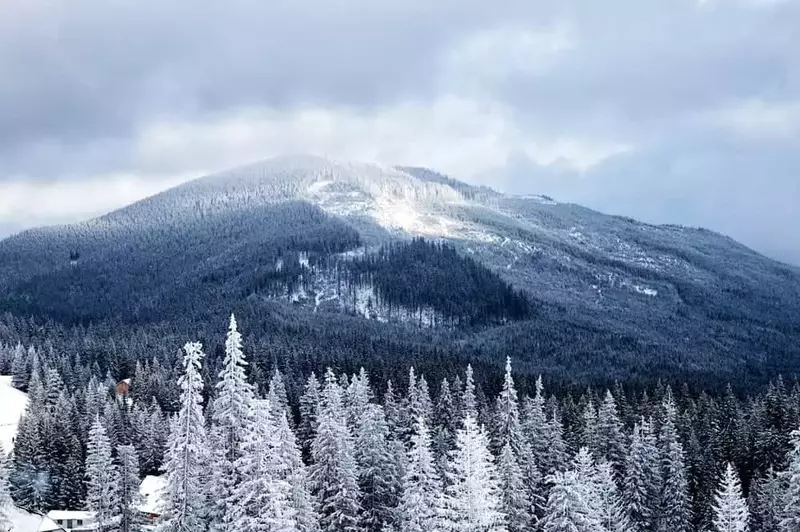
January is also the month when the mountains look most like themselves. No leaf cover means the ridgeline is fully visible from the road. Snow on the upper elevations, when it comes, sits on bare branches and open rock faces rather than disappearing into foliage. The park that six million people visit every year looks, in January, like it belongs to whoever is there.
Wilderness Wildlife Week is a free, week-long event run by the Great Smoky Mountains Association during the last week of January. It draws naturalists, wildlife photographers, and park rangers for a full calendar of guided hikes, eagle and waterfowl watches, wildlife identification workshops, and photography programs. All of it is free. Most of it is led by people who know the park at a level that takes decades to build.
The eagle watch programs are the most popular and they book out. Register early if eagle watching is the draw. The guided hikes and workshops have more availability and are worth attending even for visitors who have been to the park many times. The ranger-led version of a trail you’ve walked before is a different experience.
This is the event locals plan their January trip around and that most tourist content never mentions. If the trip has any flexibility around dates, the last week of January is the week to be here.
Ober Mountain in Gatlinburg is Tennessee’s only ski resort and January is its core operating month. Ski runs, snow tubing lanes with a magic carpet lift, and an ice skating rink all run through the winter season. The aerial tram from downtown Gatlinburg up to the mountain costs $29 per person and is worth taking regardless of whether anyone in the group skis. The views on the way up are the kind that make people stop talking mid-sentence.
Snow tubing sessions run 90 minutes with multiple lanes and no experience required. For families or groups where not everyone skis, tubing is the move. For serious skiers who want more than what Ober offers, Cataloochee Ski Area and Sugar Mountain are within a two-hour drive and have more challenging terrain.
Our complete Smoky Mountains skiing and snow tubing guide covers everything: lift ticket pricing, tubing session booking, what to expect on the slopes, and how to build the day whether or not natural snow is in the forecast.
The move locals make that most visitors don’t know about: skip the Gatlinburg entrance and come in through Townsend instead. The Townsend entrance on the western side of the park, called the Peaceful Side for a reason, puts you at Cades Cove in about 20 minutes without touching the Gatlinburg corridor at all. In January, Cades Cove on a weekday morning via the Townsend entrance is as close to having the park to yourself as a visitor can get.
Wildlife is more active and more visible in January than any other month. Deer, and the occasional black bear emerging from semi-hibernation move through the open meadows of Cades Cove early in the morning. The loop road with no leaf cover and almost no other cars is a different experience than the summer version entirely.
The Foothills Parkway is worth knowing about. It’s a 38-mile ridge-top road that runs along the northern boundary of the park, entirely separate from the main park roads and almost entirely absent from tourist recommendations. The overlooks on a clear January day, with the full ridgeline visible and no haze, are some of the best views in the region. No entrance fee. No crowds. Almost no one goes.
Snow in the Smokies isn’t guaranteed in January but when it comes, locals treat it as a gift rather than an inconvenience. The upper elevations get snow more reliably than the valley floor, which means Newfound Gap Road and the Clingmans Dome area can be snow-covered when Gatlinburg is just cold and wet. Check road conditions before heading up. Clingmans Dome Road closes in winter, but Newfound Gap itself often stays accessible and the views with fresh snow on the ridgeline are worth the drive.
The Foothills Parkway overlooks with snow on the mountains behind them are one of the more photographed winter scenes in the region, and on a snowy day the road is nearly empty.
One waterfall tip that almost no published content mentions: Baskins Creek Falls is accessible in winter even though Roaring Fork Motor Nature Trail closes. Park at the Rainbow Falls trailhead and walk about 0.3 miles to the Baskins Creek trailhead. The falls are roughly 40 feet, two-tiered, and on a snowy January day with almost no one else there, they’re as good as the Smokies gets.
January rain days are best spent in the valley, and the Smoky Mountains corridor has enough indoor options to fill a full day without defaulting to the Parkway tourist strip.
Sugarlands Distilling Company and Ole Smoky Moonshine are both in Gatlinburg and both worth an hour of a rainy afternoon. The tastings are free, the product is good, and the combination of both stops in an afternoon costs almost nothing and lands better than most planned activities. Pick up a bottle of something before you leave.
The Great Smoky Arts and Crafts Community east of downtown Gatlinburg is an 8-mile loop of working artisan studios (potters, weavers, woodworkers, jewelers) that most visitors never find. The studios are open year-round and on a rainy January weekday they are as uncrowded as they ever get. This is a two-hour wander worth making that has nothing in common with the Parkway souvenir shops.
Ripley’s Aquarium of the Smokies in Gatlinburg is one of the better aquariums in the Southeast and a reliable rainy day anchor for families. The Old Mill in Gatlinburg is worth a stop for anyone who wants to see a working grist mill and pick up grits, cornmeal, and a good lunch.
For anyone willing to take a short drive: the Harrisburg Covered Bridge in Sevierville is an 1875 covered bridge sitting in a residential neighborhood that almost no tourist content mentions. It is free, quiet, photogenic, and completely off the radar. Worth a detour on a slow January afternoon.
The January itinerary from someone who lives here looks like this: a weekday cabin stay, a slow morning with coffee and whatever is visible from the deck, one good hike before noon, one distillery stop or long lunch in town, back to the cabin before dark. No agenda past that.
The hike locals reach for in January that other websites don’t mention: the Elkmont Troll Bridge. It’s a moss-covered stone footbridge on a side trail near the Elkmont Historic District, off the start of Little River Trail. It’s short, it’s quiet, it’s the kind of thing you stumble on and immediately want to show someone. In January with no one else on the trail it feels like a discovery.
The Townsend Wye, where the Middle Prong of the Little River splits near the Townsend entrance, is worth a stop on the way in or out. In summer it’s a popular swimming hole. In January it’s just a beautiful place where two rivers meet and no one is there.
January is also when the dinner reservations that require two weeks of lead time in October are available on the same day you decide you want them. The Peddler Steakhouse. The Park Grill. Crystelle Creek. The restaurants worth going to in Gatlinburg are all accessible in January in a way they simply aren’t the rest of the year.
January and February are when the “you don’t have to burn PTO for this” case makes the most sense. Cabin rates are at their lowest. The mountains are at their quietest. And a cabin with reliable WiFi, an indoor pool, and enough space for the kids to disappear for a few hours is a better remote work setup than most home offices.
Our Flashy Splashy Lodge sleeps up to 12 and was built for exactly this kind of stay. The game room and indoor pool keep kids occupied while work happens. The decks and the mountain view are there when the laptop closes. The hot tub is there after everyone goes to sleep. A four-night weekday stay in January costs less than a weekend stay in October and gives the group a version of the Smokies that the October crowd never sees.
For homeschool families, January in the national park is a classroom. Wilderness Wildlife Week alone covers wildlife biology, photography, and conservation in a way no curriculum replicates. The working grist mill at The Old Mill, the artisan studios in the Arts and Crafts Community, the history at the Elkmont Historic District: a January week in the Smokies covers more ground than a month of textbooks.
January availability is the best of the year and rates reflect it. The exception is Wilderness Wildlife Week, which draws enough visitors that the last week of January books earlier than the rest of the month.
Flashy Splashy Lodge sleeps up to 12 with a private indoor pool, game room, movie room, hot tub, and multiple decks. Views From The Mountain Top sleeps up to 10 with four king suites, panoramic mountain views, and a hot tub that earns its keep in January weather.
Check availability at smokyridgegetaways.com/cabins. For the full picture of what the Smoky Mountains look like across the winter months, our complete winter guide covers January alongside November, December, and February.