

Most people think of the Smoky Mountains as a spring, summer, or fall destination. The people who have been in the winter know something the rest of the travel calendar does not advertise: the mountains in December, January, and February are a completely different experience from any other time of year, and in many ways a better one.
The crowds are gone. The rates drop. The park opens up in ways it cannot when summer and fall visitor counts push into the millions. And a cabin in the Smoky Mountains in winter is not just a place to sleep between activities. It is the activity. This guide covers all of it, from what winter actually looks like month by month to what the locals know that most winter travel content never touches.
The honest case for a winter Smoky Mountains trip starts with what you do not have to deal with. No October parking lots that fill before 9am. No summer Parkway gridlock that turns a ten-minute drive into forty-five. No trailhead queues. No two-hour restaurant waits on a Saturday night. The infrastructure of one of the most visited tourism regions in the country is fully operational in winter and the crowd pressure that makes peak season occasionally frustrating has simply evaporated.
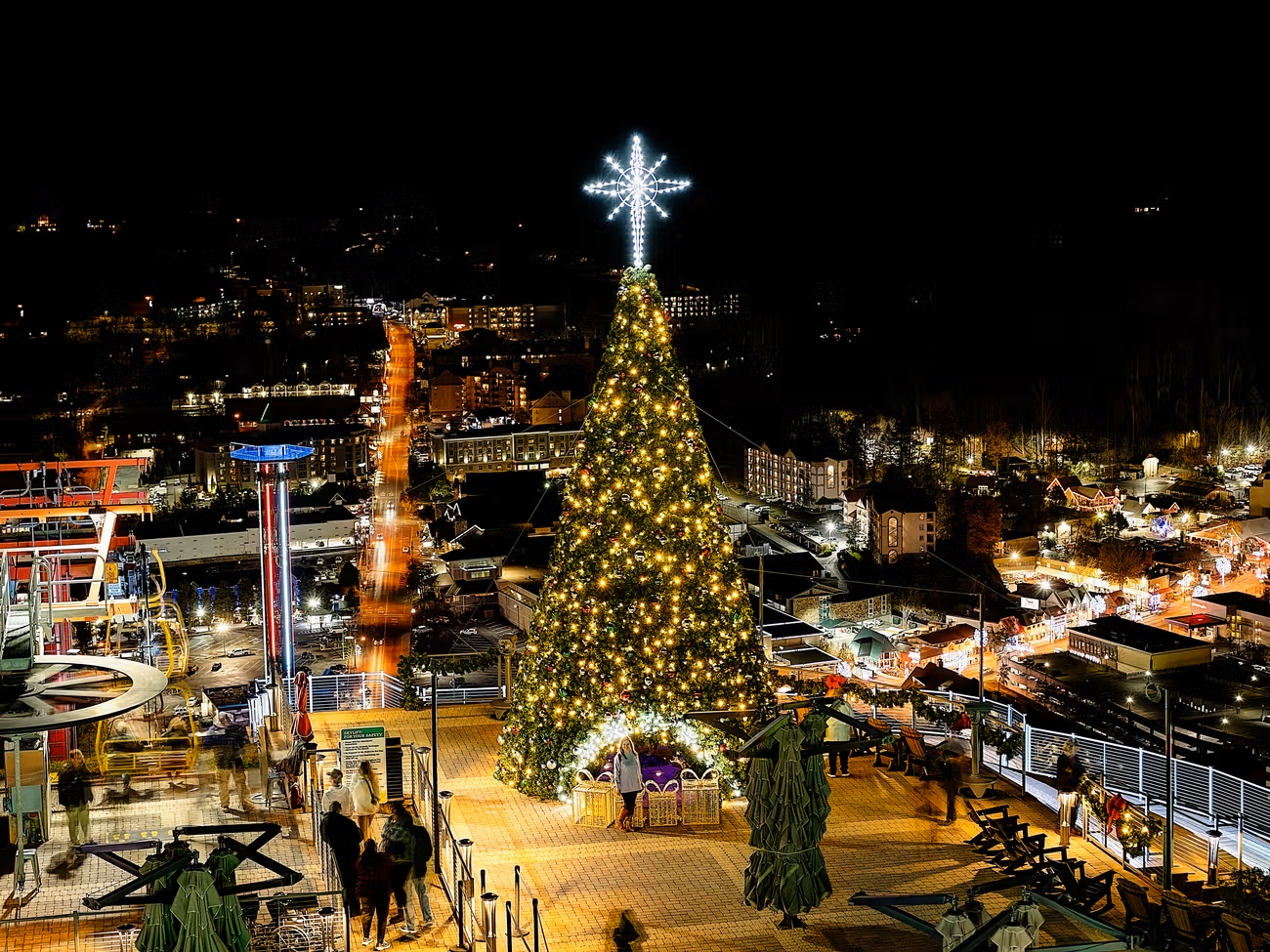
What replaces it is something harder to describe but easy to experience. A quieter version of the same mountains. Restaurant servers who have time to talk. Trails where you might walk an hour without seeing another group. Gatlinburg in the evening with Winterfest lights reflecting off wet pavement and almost nobody between you and the view. The Smoky Mountains in January is not a consolation prize for people who could not make it in October. It is a different and genuinely rewarding version of the same place.
December is the most event-dense winter month in the Smoky Mountains by a significant margin. Dollywood Smoky Mountain Christmas runs through early January with over six million lights and nightly entertainment. See our Dollywood Christmas Guide for more details. The Gatlinburg Fantasy of Lights Christmas Parade fills the Parkway on the first Thursday of December. Winterfest lights activate across Pigeon Forge, Gatlinburg, and Sevierville. The Incredible Christmas Place in Gatlinburg, one of the largest Christmas stores in the country, draws visitors specifically for the shopping experience. Anakeesta runs Enchanted Christmas with holiday lighting across the mountaintop park. Check out our Guide to a Smoky Mountain Christmas for more Xmas specific details.
Temperatures in December average in the low 40s during the day and drop into the 20s overnight at higher elevations. Snow is possible but not guaranteed at valley elevations. At 4,000 feet and above, accumulation is more likely. The week between Christmas and New Year’s is the busiest occupancy period of the entire winter season. The days immediately before Christmas, roughly December 20 through 23, offer the full holiday experience with significantly lighter crowds than the holiday week itself.
For everything you need to plan New Year’s Eve specifically, our New Year’s Eve in the Smoky Mountains guide covers the ball drop, the local tips, and why staying past January 1 is the smartest move in the region.
January is the month locals recommend to anyone who asks when to visit without the crowds. Wilderness Wildlife Week typically runs in mid-January in Pigeon Forge, offering free guided hikes, nature programs, and wildlife presentations through the national park run by professional naturalists. It is one of the most substantive free events on the annual Smoky Mountains calendar and draws a fraction of the attention it deserves.
Everything else in the region is open and operating. Dollywood continues through early January. The Winterfest lights run through mid-February. Restaurants are accessible. The national park is fully open. Cabin rates in January are typically the lowest of the entire year. For anyone with schedule flexibility, a January trip to the Smoky Mountains delivers more of the authentic mountain experience per dollar than any other month on the calendar.
Temperatures in January average in the mid-30s during the day and drop into the teens and 20s overnight. Snow is more common in January than December, particularly at elevation. The park roads above 5,000 feet, including Clingmans Dome Road, close seasonally in winter and reopen in spring.
February in the Smoky Mountains is the quietest month of the year and the one that rewards visitors who appreciate having the mountains largely to themselves. Valentine’s Day draws couples to the region for romantic cabin weekends with hot tubs, fire pits, and mountain views. Winterfest lights continue through mid-February. The Wilderness Wildlife Week programming sometimes extends into early February depending on the year. Check out our guide to Valentine’s Day in the Smokies for more details.
By late February the first hints of spring begin appearing at lower elevations. Early wildflowers emerge in sheltered south-facing coves in the final weeks of the month. The transition from winter to early spring in the Smokies happens gradually and February captures the tail end of true winter before the spring crowds begin building in March. Temperatures in February average in the upper 30s during the day with overnight lows still dropping into the 20s at elevation.
Winter hiking in Great Smoky Mountains National Park is one of the most rewarding outdoor experiences the region offers and one of the least publicized. The leaf canopy is completely gone from November through March, which opens up long-distance views through the forest that are simply not available the rest of the year. Ridgelines and valley floors that are hidden behind a wall of green in summer become fully visible in winter, and the visual experience of a trail changes fundamentally.
Alum Cave Trail to Alum Cave Bluffs is one of the best winter hikes in the park. The icicles that form on the concave cliff face of the bluffs in January and February are spectacular in a way that has nothing to do with the leaves and everything to do with the cold. Laurel Falls is accessible year-round and the falls run strong in winter from seasonal precipitation. The Roaring Fork Motor Nature Trail closes seasonally in winter so confirm current road status before heading out.
A few important winter hiking notes. Ice forms on shaded trail sections, particularly north-facing slopes and areas near water crossings. Microspikes or traction devices are a worthwhile investment for any winter visit that includes trail time. Dress in layers and carry more water than you think you need since cold air masks dehydration. Let someone know your planned route and expected return time.
This is the winter outdoor experience that almost no Smoky Mountains travel guide covers adequately. After a sustained cold snap the waterfalls in the national park partially or fully freeze, producing ice formations that are spectacular and completely unique to the winter season. Grotto Falls, accessible from the Roaring Fork corridor when the road is open, is one of the best for winter ice formations. Laurel Falls and Abrams Falls also produce impressive winter displays after extended cold periods.
The window for frozen waterfall conditions is unpredictable and weather-dependent. Check the national park’s social media in the days following a cold snap for ranger reports on current conditions. When the conditions align, these are among the most dramatic natural displays the Smoky Mountains produce all year and they exist for days to a few weeks before warming temperatures restore normal flow.
This is the section most winter Smoky Mountains guides skip entirely and it is the one that surprises visitors most when they discover it.
Black bears in the Smokies enter torpor in late fall and are largely inactive through late winter, but the absence of bears in winter actually improves the wildlife viewing experience for other species. Elk are highly active in winter and visible in the open meadows of Cataloochee Valley and occasionally near Cherokee on the North Carolina side of the park. The Cataloochee Valley elk herd, established in 2001 and now numbering in the hundreds, congregates in the open valley floor in winter in ways that summer vegetation makes impossible to see from the road.
Bald eagles winter along the river corridors of the Smoky Mountains region in numbers that most visitors never know about. The Little Tennessee River, the Tuckasegee River, and the reservoir systems around Fontana Lake in the western park area attract wintering bald eagles that are reliably present from December through February. Birding organizations maintain current sighting reports that are worth checking before a winter trip if eagles are on the list.
White-tailed deer are highly visible in winter for the same reason that hiking views improve: the vegetation is gone and the animals that use the forest edges and meadows are fully visible from roads and overlooks that offer only glimpses in summer. Cades Cove in January and February is a consistent and accessible deer viewing location with the added benefit of almost no traffic on the loop road.
The Smoky Mountains are not a destination ski resort region but winter snow activities are available closer than most visitors realize. Our Smoky Mountains skiing guide covers the full picture of snow sports near the Smokies including Ober Mountain in Gatlinburg, snow tubing, and the North Carolina resorts within day trip range for groups that want more vertical.
Winter is one of the best seasons for scenic driving in the Smoky Mountains. The leafless forest opens up mountain views that summer canopy completely obscures. Newfound Gap Road, when open and clear of ice, offers ridge-line vistas that look entirely different in winter than any other season. The Foothills Parkway on the western side of the park delivers the same ridge-line driving experience with pull-offs that are often completely empty in January and February. Cades Cove Loop Road is fully accessible in winter and the open valley with winter light and no leaf cover produces one of the most photographed winter landscapes in the national park.
Always check road conditions before heading into the park in winter. The national park maintains a current road conditions page at nps.gov/grsm and updates it in real time during weather events. Newfound Gap Road closes when ice and snow make it unsafe and reopens when conditions clear, sometimes within hours of a storm.
Every indoor attraction in Gatlinburg and Pigeon Forge operates in winter and the absence of peak season crowds makes the experience noticeably better. Ripley’s Aquarium of the Smokies, WonderWorks, the Titanic Museum, escape rooms, dinner shows, distillery tastings, and the full inventory of Parkway attractions run on winter schedules that are shorter than summer hours but fully operational.
The Gatlinburg Craftsmen’s Fair winter edition runs in February at the Gatlinburg Convention Center, bringing juried artisans from across the region for several days of shopping, demonstrations, and live bluegrass music. It is a significantly more relaxed version of the fall fair and one of the better winter cultural events in the corridor.
Anakeesta runs its winter programming including the Sky Bridge, the aerial gondola, and the SkyDeck throughout the winter season. The views from the Anakeesta ridge in winter, with no leaf cover obscuring the surrounding mountain panorama and Winterfest lights visible in the valley below after dark, are among the most dramatic the mountaintop park delivers all year.
The ice skating rink at Anakeesta operates seasonally in winter, typically from late November through February depending on conditions. Outdoor ice skating with a mountain backdrop is a specific and unusual experience for a region not known for winter sports and one worth building an evening around if conditions are right.
This is the section that most winter Smoky Mountains guides never write because they are not coming from the perspective of someone staying in a cabin with a private indoor pool, an outdoor hot tub, and a fire pit on a mountain deck in January.
The private indoor pool at Flashy Splashy Lodge does not have a season. When it is 28 degrees outside and the forest around the cabin is bare and still and the mountain air through the window is the coldest it gets all year, the pool room is exactly the same temperature it was in July. The contrast between the cold outside and the warm pool inside is something that does not exist in any other season and it makes a winter pool afternoon feel like a specific kind of luxury that a summer pool afternoon never quite reaches.
The outdoor hot tub in winter is in a different category from the hot tub in August. Cold mountain air against your face while the water temperature holds at 104 degrees, a clear winter sky overhead with the kind of star visibility that humidity and heat haze eliminate in summer, and the specific silence of a mountain forest in January with no insects, no wind, and no other sounds. That experience is not available in any other season and it is available every evening of a winter cabin stay.
The fire pit on a cold night is self-explanatory to anyone who has ever sat around an outdoor fire when the temperature is in the 30s. The warmth feels earned in a way it does not in September. The mountain air carries a quality in winter that is genuinely different from every other season. Cold and clean and specific to elevation.
The panoramic mountain views from Views From The Mountain Top in winter are the most unobstructed of any season. The leaf canopy that softens and partially obscures the ridge lines in summer is completely gone and the full mountain panorama visible from the deck in January is a different and more dramatic version of the same view. On mornings after snowfall the valley below the cabin carries a visual quality that is one of the genuinely spectacular experiences the Smoky Mountains delivers and one that requires being here in winter to see.
Snow at cabin elevation is possible but not guaranteed in any given winter. When it does arrive it typically settles for a day or two before melting at lower elevations, which gives a winter cabin stay the possibility of a snow morning without the sustained road closures that a flat-terrain snowstorm creates. The cabin driveway and access road are the variables worth asking about when booking winter dates. Check with our booking partner for current winter road access information specific to each property.
Wilderness Wildlife Week typically runs in mid-January in Pigeon Forge and it is the most substantive free event on the winter calendar that almost no visitor-facing content covers. Professional naturalists, wildlife biologists, and outdoor educators lead guided hikes, nature programs, and presentations throughout the week at venues across Pigeon Forge. The hikes cover national park terrain with expert interpretation that changes what you see on a trail. The indoor presentations cover Appalachian natural history, wildlife behavior, and seasonal ecology in depth that a standard park brochure never approaches. Registration is free and fills for the guided hikes specifically so check the Wilderness Wildlife Week website as soon as winter dates are announced.
Most visitors assume the Winterfest lights end with the holiday season. They run through mid-February across Pigeon Forge, Gatlinburg, and Sevierville. The full light displays along the Parkway corridors, the animal displays in Gatlinburg, and the twelve days of Christmas displays in Pigeon Forge are all operating through Valentine’s Day weekend. A February cabin stay that most visitors think of as post-holiday is actually still fully within the Winterfest window.
Locals who bird know this. Almost no visitor content covers it. Bald eagles winter in the river corridors around the Smoky Mountains region from December through February and reliable sighting locations exist within an hour of Gatlinburg and Pigeon Forge. The Chilhowee Lake area, the Little Tennessee River corridor near Vonore, and the Fontana Lake area on the western edge of the park all produce consistent winter eagle sightings. Check the Tennessee Ornithological Society or eBird for current sighting reports before heading out. Seeing a bald eagle in the wild is one of those experiences that visitors mention unprompted for years afterward and it is most accessible in winter.
This is not a secret but it is underutilized. Cabin rates in January and February in the Smoky Mountains drop to their annual lows. The same properties that command peak pricing in October and December are available at a fraction of that cost in January. For anyone with schedule flexibility, a mid-January or February cabin stay delivers the full mountain experience at a price point that summer and fall visitors never access. The experience is not a lesser version of the peak season trip. In many respects it is a better one.
Great Smoky Mountains National Park received over 13 million visitors in 2023, making it the most visited national park in the country by a significant margin. The majority of those visitors come between May and October. January visitation is a fraction of summer volume and the park experience reflects it completely. Trailhead parking lots that require arriving before 8am in July are empty at 10am in January. Overlooks that require waiting for other groups to move are yours alone. The park roads move at whatever pace you set. For anyone who loves the national park and has only experienced it in peak season, a winter visit is genuinely revelatory.
Winter weather in the Smoky Mountains is variable and requires more preparation than any other season. Here is the practical guide to navigating it.
Valley elevations around Gatlinburg and Pigeon Forge, roughly 1,000 to 1,500 feet, receive winter precipitation primarily as rain with occasional snow events that typically accumulate less than a few inches and melt within a day or two. Higher elevations above 3,000 feet receive significantly more snowfall and accumulation is more sustained. The highest park elevations above 5,000 feet can accumulate several feet of snow in a single storm and road closures at those elevations are common from November through March.
The important practical implication: a winter storm that drops six inches at Clingmans Dome may produce only rain at the cabin elevation and in the towns below. Checking the elevation-specific forecast rather than the general Gatlinburg forecast gives a more accurate picture of what to expect at the specific locations you plan to visit.
The national park maintains a current road conditions page that updates in real time. Bookmark this before your trip and check it the morning of any planned park drive in winter. Newfound Gap Road closes when ice and snow accumulate and reopens when the road crews clear it, sometimes within hours of a storm clearing. Clingmans Dome Road closes seasonally from December through March regardless of conditions. The Roaring Fork Motor Nature Trail closes seasonally in winter. Cades Cove Loop Road typically remains accessible through winter but check conditions before heading out after a precipitation event.
Tennessee does not require snow chains but does require adequate traction in winter conditions on mountain roads. If your vehicle has all-season or winter tires you are well positioned for typical Smoky Mountains winter driving. If you are driving summer-only tires, be conservative about mountain road driving after precipitation events and wait for the roads to clear before heading to higher elevations.
Visitors from flat states sometimes arrive in the Smoky Mountains in winter without experience driving steep mountain grades in cold or wet conditions. A few things worth knowing before you go.
Brake early and smoothly on descents. Mountain grades are steeper than highway driving and speed builds faster than expected on a downhill run. Pumping brakes on a descent generates heat and reduces stopping power. Engine braking, downshifting on grades, is the better technique for maintaining speed control on long descents.
Ice forms on shaded road sections before it forms on sunny ones. North-facing curves and sections under tree canopy freeze first and thaw last. Morning driving after overnight temperatures below freezing requires more caution than afternoon driving after the sun has been on the pavement for several hours.
If roads look clear they may not be. Black ice is invisible and most common in the early morning hours after an overnight temperature drop following precipitation. If in doubt, wait an hour for road temperatures to rise and for the park road crew reports to update before heading out.
The cabin access roads to both properties are mountain roads and winter conditions apply. Ask our booking team for specific winter road information when booking winter dates so you arrive prepared for what the access road requires in the conditions you are expecting.
Winter cabin availability in the Smoky Mountains is generally better than any other season with the exception of the Christmas and New Year’s holiday week, which books out months in advance. January and February availability is consistently the most open of the entire year and the rates reflect it. For groups that want the full Smoky Mountains cabin experience without the October price tag or the summer crowd, a January or February booking is the move.
A winter trip of five to seven days gives you enough time to cover the national park in multiple conditions, experience the town corridors without peak season pressure, and spend meaningful time at the cabin doing the things that make a winter mountain stay what it is. A long weekend works for a focused trip but the cabin experience specifically rewards longer stays in winter when the pace slows down in a way that a two-night trip does not fully deliver. If skiing or snow tubing is on the list, our Smoky Mountains skiing guide covers Ober Mountain, conditions, pricing, and regional options within a day trip drive.
Check availability for our cabins at smokyridgegetaways.com/cabins. Winter dates move slower than peak season but the holiday week and Valentine’s Day weekend book out early. If those specific windows are on your calendar, locking in sooner rather than later is the right move.